UNSTUCK 042: Innovate or Litigate
When you run out of things to say about your product, you say it to a judge.


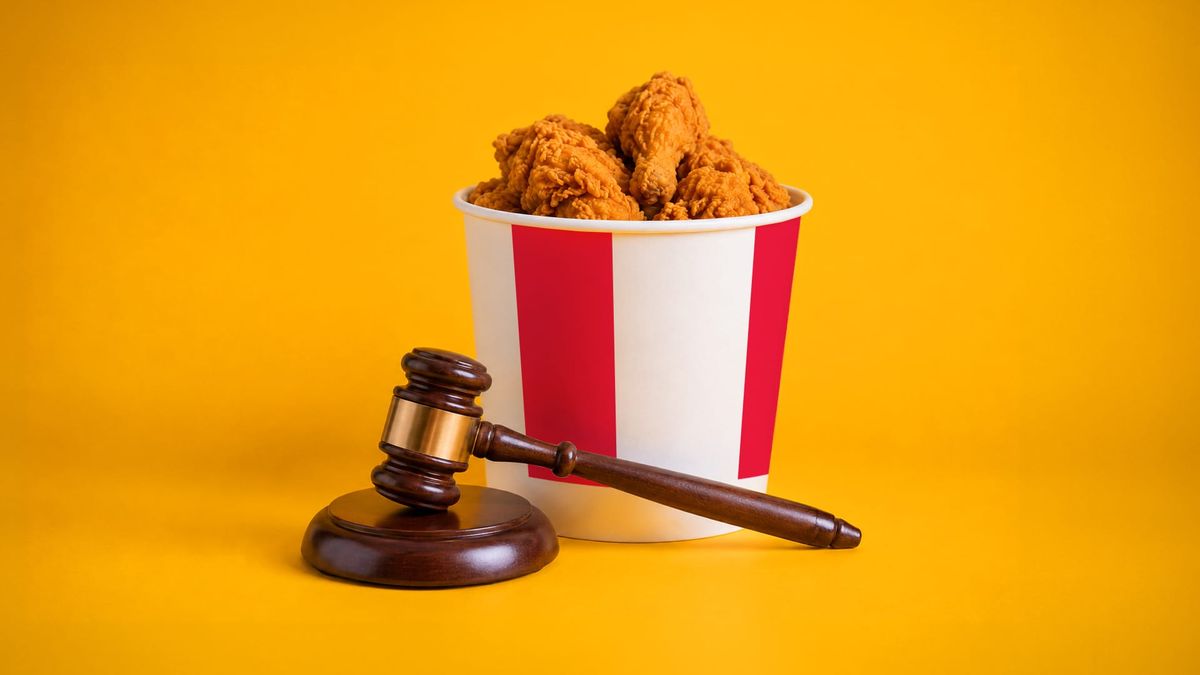
On June 15, KFC unveiled a global rebrand including a new logo, new tenders, new sauces, and new restaurant formats across 34,000 locations in 150 countries. The Colonel stayed, the bucket stayed, but everything around them got sharper.
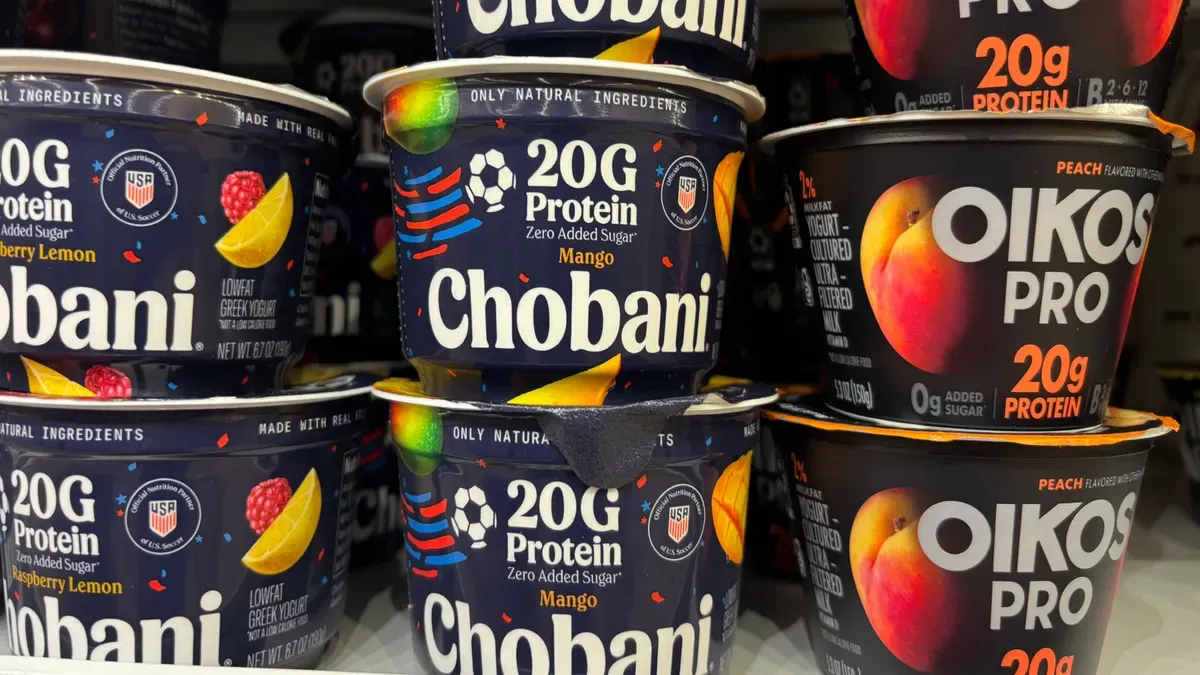
On the same day, Danone filed a federal lawsuit against Chobani in the Southern District of New York. The allegation: Chobani's 32-ounce yoghurt tubs claim 20 grams of protein per serving, but use a slightly larger serving size than FDA guidelines suggest. If you recalculate using the standard 170-gram reference amount, the number drops to 18. Danone wants a permanent injunction, label changes, and damages.
Same day, two incumbents, same problem: challengers eating share. KFC has fallen to fifth in the U.S. chicken QSR rankings by consumer spend, overtaken by Chick-fil-A, Popeyes, Raising Cane's, and Wingstop. Danone is watching Chobani closing in on its yogurt market share, with its protein yoghurt competing directly with the Oikos Pro line.
One responded by raising its game, the other responded by calling a lawyer.
KFC: Raise Your Game
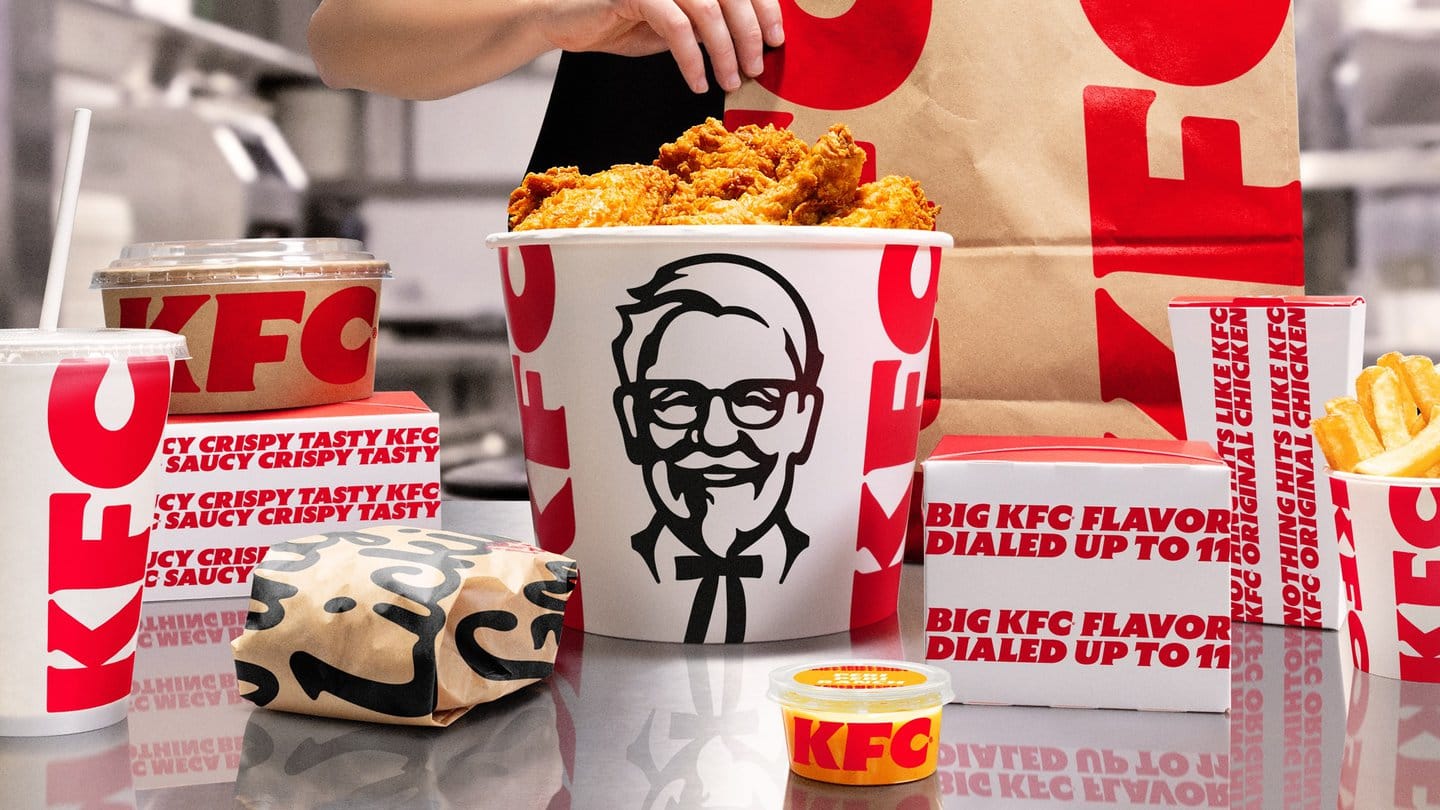
KFC created the fried chicken category. Colonel Sanders started serving chicken in 1930 and opened the first franchise in 1952. For decades, the brand was the category. Then the challengers started winning. Chick-fil-A, Popeyes, Wingstop, and Raising Cane's have been better at staying close to how consumers actually eat and what they respond to culturally. Raising Cane's sells chicken fingers and Texas toast, that’s basically the entire menu. Last year it posted $5.1 billion in U.S. sales across 900 locations, growing 31%, Wingstop grew 41%, while KFC shrank.
Last summer, KFC's CMO was blunt about it. The Colonel, she said, would not be happy about their market share.
The identity. First up was the rebrand which centres on the two assets KFC already owns that no competitor can touch: the Colonel and the bucket. The bucket becomes the organising principle of the entire visual system. Not just packaging, but a framing device. The logo goes three-dimensional, with "KFC" flanking the Colonel in a shape that echoes the bucket itself. The Colonel gets a subtle update with a thicker outline and warmer expression. The stripes stay, joined by a secondary "Herbs and Spices" palette and new custom typefaces. It looks recognizably KFC, just with sharper elbows. When you already own the most recognisable brand assets in the category, you don’t reinvent them, you amplify them.
The store. Then the rebrand extends into the physical experience. New restaurant formats are designed around hospitality, not just throughput. An open-concept store is opening in McKinney, Texas this summer and a two-storey flagship is coming to Dubai in September. The ambition is to make KFC somewhere you would actually want to spend time. Think about what McDonald's was for a generation of teenagers: not a restaurant, a social space. KFC's stores have not been that for a long time.
The sauces. Over 20 new sauces from chimichurri ranch and hot honey habanero to Korean BBQ and mango masala. They reinforce the core product, which has also been updated with new tenders and boneless options designed for dipping and dunking. They let individual markets customise without fragmenting the master brand and, crucially, they give people more ways to eat the thing KFC is already famous for.
So far, KFC are putting their best insight and brand feet forward. We’d argue they should have stopped there, but instead they kept going to ...
... the drinks. KWENCH by KFC. Boba refreshers, milkshakes, sparkling lemonades, iced coffees are a harder sell. Nobody is walking into a KFC specifically for a boba refresher, the chicken pulls you through the door. You might buy a drink while you're there, but the drink is not the reason you came. Compare this to how McDonald's built McCafé. McDonald's already had milkshakes, it had an established breakfast daypart, and it built into coffee from a position of existing credibility. KFC has none of that scaffolding. Trying to build a beverage sub-brand from scratch feels the one part of this refresh that was dreamed up in a strategy deck rather than observed in the real world. And a missed opportunity to use beverages for borrowed equity through partnerships with culture-forward drinks brands, giving a further point of localisation.
Danone vs Chobani: The protein trap
On the face of it, fast food chicken and yoghurt don't have much in common. But both categories are in high demand, product innovation is rife, and challengers are disrupting incumbents who are struggling to keep up. While KFC takes a hard look at its brand, Danone has gone on the defensive.
The dispute is, on its surface, numbingly technical. Danone's Oikos Pro delivers 20 grams of protein in a standard 5.3-ounce single-serve cup. Chobani's "20G Protein" tubs also claim 20 grams, but in a multi-serve format where the listed serving is three-quarters of a cup at 190 grams. Danone's argument: use the FDA's standard 170-gram reference amount instead, and the serving rounds down to two-thirds of a cup, containing about 18 grams, below the magic round number Chobani has no doubt worked hard to hit.
Normal consumers will never know this dispute exists. The business dynamic underneath it is worth paying attention to.
Protein has become the only number that matters. 70% of Americans say they're actively trying to consume more protein, up from 59% in 2022, and four in ten say grams-per-serving is their top reference point on packaging. Oikos Pro, Chobani 20G Protein, Siggi's, Fage Total: the whole aisle has converged on the same metric. When every product competes on the same number, brands stop mattering and the question becomes which container shows the biggest figure on the front. That is the environment in which Danone decided the best use of its resources was arguing whether 20 really means 18.
Litigation as a strategy. This is not a one-off. Danone has sued Chobani four times in a decade: over a chlorine claim in 2016 (won), a sugar claim in 2019 (lost), a coffee packaging and slogan claim last July, and now protein grams. The products change, the tactic doesn't.
What Chobani has actually built. Before Chobani, Greek yoghurt held about 1% of total U.S. yoghurt sales; today the category holds around 50%. Hamdi Ulukaya built the category with a product that meant something, high-protein, simple ingredients, a founder story, then expanded into oat milk, creamers, and cold brew via the $900 million La Colombe acquisition. Chobani itself is now the largest yoghurt maker in the country, with a $20 billion valuation as of its October 2025 funding round.
Danone is fighting over label arithmetic because, in the demand-creation battle, it's losing. When the strongest thing you can say about your product is that a competitor's rounding is technically non-compliant, you have run out of things to say. That’s when you take the KFC road, go back to your brand and take a long hard look at how to make it relevant and differentiated beyond the one thing everyone else in the industry has centered themselves around.
This is even more important given the bigger problem around the corner. Whey protein is a cheese byproduct you can't ramp up independently (although there are technological advancements to do just this, they are a few years away from meaningful scale). It is now trading at over $13 per pound, up 250% in a year, with some suppliers sold out through year-end. GLP-1 patients advised to eat more protein to preserve muscle mass are adding fresh demand just as semaglutide patents expire and the weight-loss market opens up. An entire industry has converged on one number, where protein means healthy so put it on the pack, and the supply chain can't support what that convergence has created. You cannot build a sustainable business on a commodity with this much price volatility, no matter how loudly you shout the number on the label. You need to find other ways to drive your value so your brand can weather the bumpy pricing road ahead.
Consumer closeness, cultural relevance and meaningful differentiation aren't startup tactics. They're the tactics that work at every size. The successful challengers know this. The incumbents that figure this out raise their game. The ones that don't call their lawyers.