UNSTUCK 041: How Beans Escaped The Bottom Shelf
And what food innovation keeps getting wrong about demand


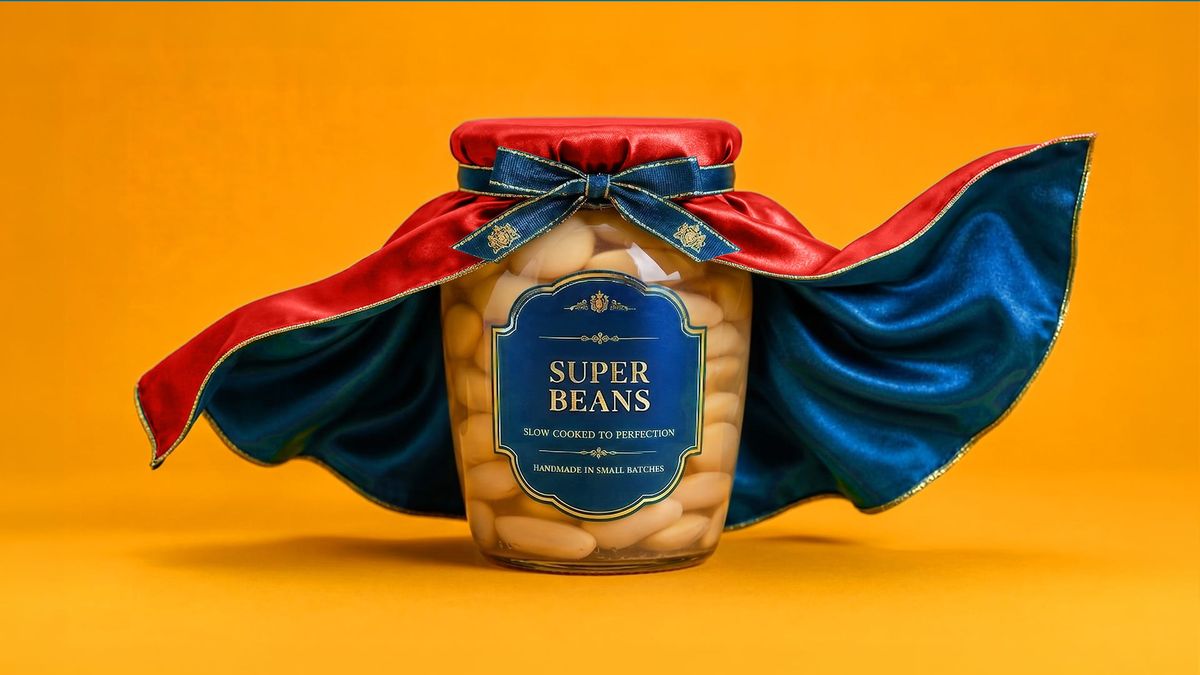
For most of history a bean was what you bought when you couldn't afford better. Bottom shelf, tinned, loose change. The useful thing in the cupboard that stretched a meal.
Then a few years ago people started paying four pounds for a jar of them and posting about it on TikTok.
Nobody invented a hi-tech bean. It's the same basic food people have eaten for millennia, but some entrepreneurial founders have completely changed the narrative around beans. They prioritised flavour and texture over cost efficiency. They put them in glass jars. They got chefs cooking with them. They created recipes, rituals and reasons to care. Then they let the internet do what the internet does best: turn a once-humble ingredient into a minor personality trait.
We make light of what has no doubt been a lot of hard work, to make the point that the bean upstarts have done something simple, incredibly well. Bold Bean Co in the UK grew 259% in a year while the wider category managed 20%.
There was no new technology. No patent, no breakthrough, no proprietary strain engineering. Just a humble product that had been sitting there the whole time, waiting for someone to make it worth noticing.
That should make a lot of the food industry deeply uncomfortable.
The innovation wasn’t the bean
It’s somewhat ironic that at the same time alternative protein companies are trying to mimic commodities, bean companies are busy elevating a commodity into a prized ingredient.
Beans used to be interchangeable. No black beans? Chuck in the kidney beans. No chickpeas? Use cannellini. Nobody was going to call the pantry cops.
But premium bean brands have started teaching consumers that beans are not all the same. They differ in texture, flavour, cooking liquid and use. Some are better for salads. Some collapse beautifully into stews. Some bring a rich, starchy broth that becomes half the point of the dish.
That is the shift from commodity to ingredient.
You can swap a supermarket chickpea into a Bold Bean recipe, but it will not behave in quite the same way. It will not have the same creamy texture or the same quality broth. Bold Bean even explains the hack in its cookbook for people using ordinary tins from the back of the cupboard, which is quietly brilliant. It makes the brand feel generous rather than precious. It says: yes, our beans are better, but the bigger mission is to get you cooking with beans more often.
That is brand-building with actual consumer value. A rare and beautiful thing, like a marketing meeting that ends early.
Once consumers believe quality differences matter, they are willing to pay more. Not because the product is technically new, but because the difference has become meaningful.
This is where much of food innovation gets stuck. A plant-based chicken breast may offer a moral reason to switch, in time it may be a cheaper option, but unless it also offers a better eating reason, all but the highly value conscious and vegans will consider it a compromise. The benefit sits outside the eating experience, while the trade-off sits inside it.
Oat milk works differently. In high-end coffee, it has become more than a substitute. It has a flavour profile people like, steams well, looks good in the hands of baristas, and has become part of modern coffee culture. It doesn’t just ask people to give something up, it gives them something to adopt.
That is the difference.
Selling discovery, not just beans
Take Rancho Gordo, which has sold heirloom beans out of Napa since the early 2000s. Demand now runs so far enough ahead of supply that the bean club has a waitlist tens of thousands deep.
That’s right. People queue, on a list, to buy beans on subscription.
Rancho Gordo did it by giving beans identities. Not just pinto and cannellini, but specific varieties, each with a grower, an origin and a flavour you could describe. Once a bean has a name you can have a favourite, run out of it, wait for it to come back. You can tell someone, with a straight face, that you’re excited about a bean drop.
This is how the product begins to behave less like a staple and more like a small-batch coffee, craft chocolate or natural wine. The core object is still familiar, but the meaning around it has changed.
Becoming part of food culture
In 2003, Thomas Keller walked up to Steve Sando’s stall at a Napa farmers market and bought a few bags of beans. Keller, of The French Laundry fame, put Rancho Gordo beans on the menu. Other chefs noticed. Food writers had something to write about. Then home cooks had permission to care.
That sequence matters. Chefs made the beans credible, writers gave them language, then the internet gave everyone else a way to perform discovery.
This is how food culture often moves. Not through one big campaign, but through a slow accumulation of signals. A chef uses it. A cookbook explains it. A newsletter recommends it. A friend serves it at dinner. Someone posts a bowl of beans under flattering light and insists, with the confidence of a recent convert, that beans are underrated.
It looks organic because it is organic. But organic does not mean accidental.
This is exactly why big companies are often bad at it. They want the social proof without the patience, the community without the weirdos, the cultural energy without the risk of letting something build its own way.
Make the category worth talking about
The holy grail of any food brand is word of mouth. When consumers are doing their online shopping or standing in the aisle, you want your brand to already be in their head. Not because they saw a banner ad twelve times, but because someone they trust cooked with it, talked about it or made it feel desirable.
That is what the best bean brands have understood. They did not just say, “our beans are better.” They made beans interesting.
The Bold Bean cookbook is a regular feature on our countertops. Visiting friends and family ask about it and the next thing they know, we are making the pitch for beans to anyone who shows even mild curiosity. This is ridiculous behavior, but it’s also what every food brand should want in a category where the power of influence is greater than any other.
Because the cookbook is not just content. It teaches people what to do with the product. It builds confidence and creates occasions. It moves the brand from the cupboard to the conversation.Much as wine lovers will talk about their latest discovery, food lovers can now talk about what they are doing with beans. The beans you choose say something about you: that you care about flavor, that you know where to find interesting things, that you’re the kind of person who can make dinner out of a jar of legumes and somehow make it chic.
By giving beans an identity: premium, taste profiles, culturally progressive, they’ve allowed the people who use them to adopt that identity for themselves. The beans you choose says something about you.
A Lab Can’t Make People Care
None of this means technology, R&D or innovation departments do not matter. Building a genuinely new ingredient is hard. Making it taste good is harder. Making it at a price anyone will pay is harder still. Beans had a ten-thousand-year head start on all of that.
But the bean boom is a useful correction to where the industry often points its energy.
In many food companies, the money and the best people go into the product, the process and the factory. Far less goes into the more basic questions. Why should anyone care? How should they use it? What does it say about them? Who gives it credibility? What makes it worth talking about? How does it move from trial to habit to advocacy?
That work too often gets left until last. Or worse, left to “the launch campaign” where good products go to be covered in questionable adjectives.
Bold Bean and Rancho Gordo did not invent demand from nothing. They noticed that beans already had depth and flavor, history and utility, and then they sourced the best beans to make those qualities visible. They gave the product stories, recipes, credibility and social life. They turned a commodity into an ingredient, and an ingredient into a small act of taste.
That is the uncomfortable lesson for the rest of the food industry. Sometimes the bottleneck is not the product innovation. It is the meaning around the product.
A lab can make something technically impressive. It cannot, by itself, make people care.