UNSTUCK 040: Cultural Inertia Is Not A Strategy
Why the food industry's favourite comfort blanket is wearing thin.


Gas in the US just hit $4.45 a gallon. In California, it's over six dollars. In the UK, it’s getting to £1.60 a liter. All of this in the space of two months, driven by the closure of a strait most people couldn’t have found on a map back in January.
Within days of the latest Iran conflict starting, MG dealers in Surrey reported a spike in test drives. BYD showrooms started taking Saturday appointments. EV consideration across the US hit its highest level since the tax credit deadline. The eco warriors who bought Teslas in 2019 because they cared about polar bears suddenly looked less like idealists and more like people who'd read the room five years earlier.
Energy is the one commodity where cause and effect plays out in real time. Geopolitics happens on a Tuesday, and by Thursday you're staring at the consequences on a sign the size of a billboard at every gas station in the country. It's visceral, personal, and impossible to ignore because it's literally illuminated.Nobody expects food to behave like this, and they're right. Sort of.
Everyone understands food works differently
Food isn't a single commodity with a single price signal. There's no giant illuminated sign outside Walmart or Lidl telling you that wheat futures are up 12%. Tesco doesn't have a ticker. You don't feel the cost of soybean oil in your grocery run the way you feel $6 a gallon or €2 a liter.There's also more government intervention. Strategic grain reserves, the EU's Common Agricultural Policy, USDA subsidies, Japan’s rice protectionism. The system is engineered to prevent the kind of overnight shock that reshapes consumer behaviour in energy markets.
And food is emotional in a way that fuel will never be. Shell has spent decades trying to make you care about V-Power. It has not worked. Nobody has a nostalgic connection to 95 octane. Nobody instagrams their petrol.But food? Food is identity. Food is culture. Food is your grandmother's schnitzel in Zagreb, your mother-in-law’s kimchi jjigae in Seoul, the Thanksgiving turkey nobody actually likes but everybody expects. Tell someone their food traditions are going to change and watch them take to the streets.
This is where the food industry gets comfortable. "Our category is different," they say. "Food is cultural. People don't change what they eat." It's a comforting story. It also happens to be wrong.
This doesn’t mean food is static
When you zoom out you see that food changes slowly day to day but dramatically decade to decade.
For most of human history, people ate what grew nearby, what survived winter, and what their parents taught them to cook. Your grandparents inherited “traditional food” because alternatives barely existed. We grew up when avocados were exotic and hummus was non-existent.
We like to think habits were permanent because they were cultural. In reality, they were logistical. Once supply chains globalised, migration accelerated, refrigeration improved, and media became international, food culture started mutating at extraordinary speed.
Look at Britain alone. In 1960, the national meal was still effectively meat and two veg. By the 1980s, Italian food had arrived. By the 1990s, curry had become a national institution. Now we have poke bowls, Korean fried chicken, falafel, tacos, kimchi and matcha. Today, a teenager probably consumes more cuisines in a month than their grandparents encountered in a lifetime.
Thirty years ago, sushi outside Japan was niche even in major Western cities. Raw fish triggered suspicion. Seaweed was obscure health-food-shop material. Now you can get your sushi fix in high end restaurants, high street fast food stops and supermarket meal deals.
The same story repeats everywhere.
In South Korea, cheese consumption barely existed historically. Today Seoul is saturated with cheese-heavy Western fusion food. China’s coffee market is growing rapidly among younger urban consumers, at the same time as tea consumption itself evolves and expands in new forms. Americans who grew up thinking yoghurt meant fluorescent strawberry cups now buy Icelandic skyr, kefir, and gut-health drinks containing bacterial strains we can’t pronounce.
We’ve witnessed the era of logistical change. Now we’re witnessing the era of optimisation. The abundance of choice in developed countries means health, novelty, ethics, convenience, social media, and global travel are once again rewiring demand.
Food culture looks astonishingly fluid when you zoom out.
So what do you do about it?
Much of the food industry still behaves as though consumer behavior is anchored by immutable tradition. This is especially true of the naysayers towards technological advancements who assume people will always want the same proteins, the same formats, the same farming systems.
History shows consumers are perfectly capable of rewiring their diets. However, there won’t be a fuel price shock that immediately alerts people to the benefits of alternative protein or the need for chocolate made without cocoa beans.
But steadily enough, culture can shift to a place where the new behavior will feel inevitable. The two questions every food company should be asking themselves is what will that behavior be, and how do we align ourselves with it?
For decades in big food companies, the winning strategy was optimisation: scale what already works, defend category share, extract efficiency from stable demand. But that only works if the demand stays stable. The key action now is controlled self-disruption.
That means treating parts of the existing portfolio as temporary rather than permanent. Building credible internal replacements for core categories before external ones force the issue. We’ve seen time and again that “innovation hubs” or adjacent lifestyle SKUs don’t scale. We need more genuine substitution bets that are allowed to cannibalise legacy revenues. The companies that survive this cycle of food change will not be the ones that protect margin on today’s basket, but the ones willing to shrink yesterday’s business to own tomorrow’s.
For start-ups and challengers, the job to be done is not invention. It is one of insertion and becoming a frictionless choice. There is no value in winning in labs and losing in lunchrooms. The breakthrough is not convincing people to rethink but becoming a part of their repertoires. 5 years ago Oatly was telling us the carbon footprint of their products. Now they’re telling us how to make a ginger nut chai and appearing at Milan fashion week. They’ve understood that food adoption isn’t a rational upgrade. It is a cultural migration.
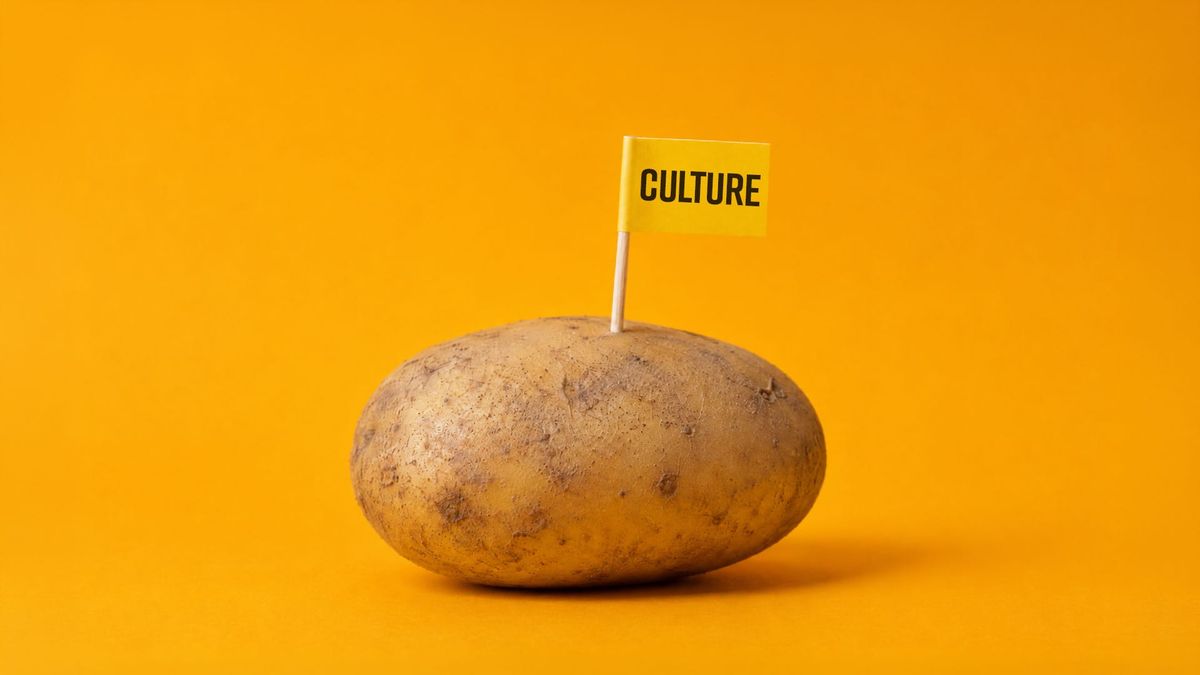
Cultural inertia is real. But it is not a strategy.
When 3G Capital and Berkshire Hathaway merged Kraft and Heinz in 2015, the thesis was simple. These brands were so deeply embedded in American food culture that demand was essentially permanent. Ketchup, mac and cheese, Oscar Mayer hot dogs, Philadelphia cream cheese. Products that had been in kitchens for generations. The playbook was to cut costs, protect the brands, and extract margin from stable demand. Cultural inertia as a business model, turned into a spreadsheet.
Then they wrote down $15.4 billion. Turns out the demand wasn't stable. Consumers were drifting to fresher food, private label, smaller brands with actual stories to tell. The products hadn't changed, but the people buying them had. Slowly, quietly, and then all at once.
Netflix understood this from the other side. DVD-by-mail was still making money when they decided to gut it and bet everything on streaming. The stock crashed 77%. Wall Street thought they'd lost their minds. The safe play would have been to ride out the DVD margin and transition slowly. Instead they forced the future forward. The DVD business wasn't dead yet. But they could see it was dying, and they refused to let nostalgia set the pace.
The food industry needs that same willingness. Not a line extension. Not an innovation hub that reports to nobody. A genuine readiness to look at the products that built the company and ask whether they're still building it, or just furnishing the museum.
Cultural inertia doesn't keep you safe, it's just the reason you haven't noticed you're not.