UNSTUCK 038: The Ozempic Brand Playbook
How a drug has built more desire than your entire category


Nescafé took 87 years to become an estimated $10-12 billion brand. Nespresso, backed by decades of Nestlé investment, sits at $7.1 billion. Lay's, the engine of PepsiCo's snack empire, clocks in around $8-10 billion.
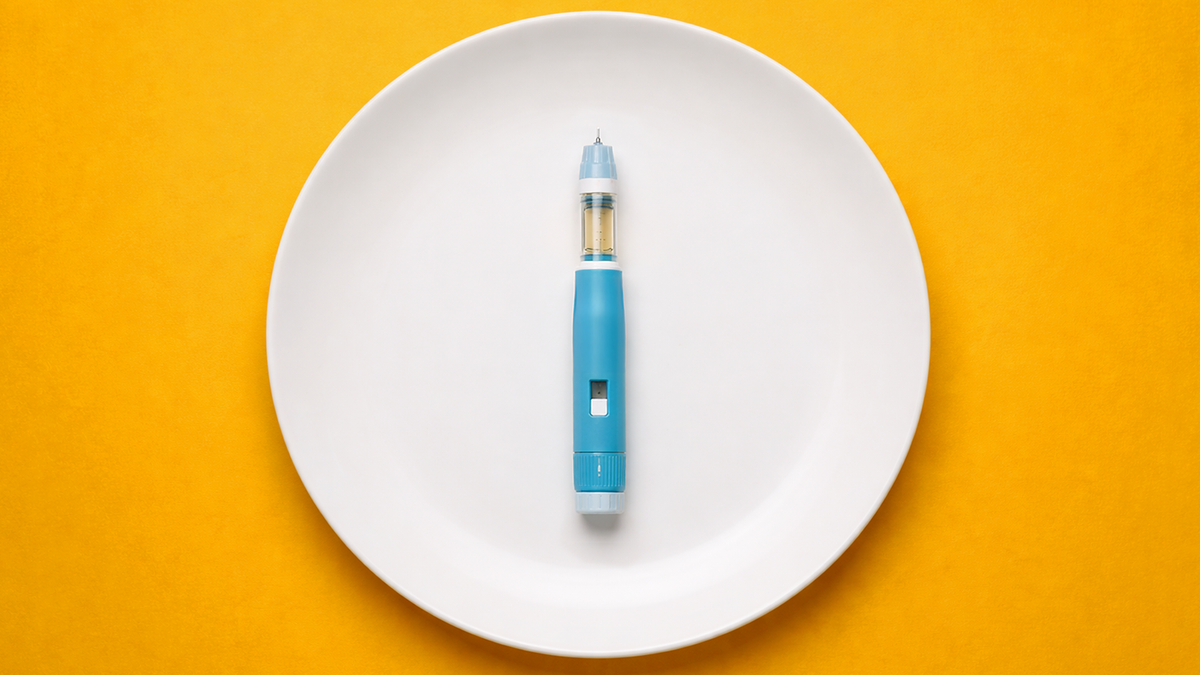
Ozempic hit $15.4 billion in 2025. It's been on the market for seven years.
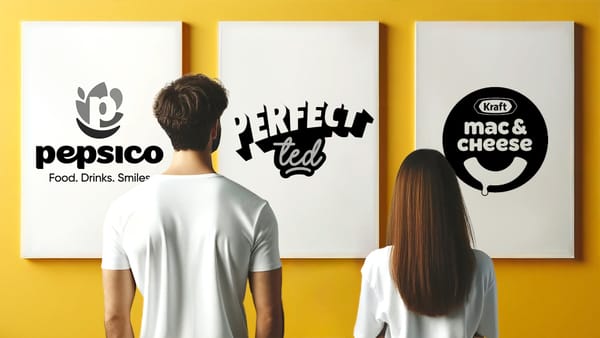
A single injectable pen now out-earns food brands that took up to a century to build. The broader GLP-1 class (Ozempic plus its sibling Wegovy, plus Eli Lilly's Mounjaro and Zepbound) is closing in on $60 billion annually, putting it on par with PepsiCo's entire food revenue. Novo's semaglutide franchise alone generates more than Kraft Heinz.
The food industry has noticed, of course. You can't miss it. But the conversation has been almost entirely defensive: what do GLP-1 drugs do to our volumes? How do we reformulate for smaller appetites? Should we launch a "GLP-1 friendly" SKU?
But Ozempic is not merely a threat to manage, it’s actually a playbook to learn from. How did a pharmaceutical company build more consumer desire, cultural relevance, and willingness-to-pay in seven years than most food brands have managed in a century? How did a product that requires a prescription, costs $1,000 a month, and is administered via a weekly injection generate more organic word-of-mouth than brands available in your local supermarket?
The answer isn't complicated. Novo Nordisk, whether by design or by the kind of market instinct most food companies have forgotten, executed the marketing fundamentals brilliantly. Framing the category, defining a positioning, pricing strategically, and creating messaging that resonates. The stuff that's supposed to be the food industry's home turf.
Ozempic just did them in a completely better way. Here's how.
CATEGORY: Reframe It, Don't Just Compete Within It
Before Ozempic, "weight management" was a category defined by its failures. From meal replacements to calorie-counting apps, from SlimFast and Weight Watchers to Atkins. Each one promising the same thing: eat less of the stuff you like, more of the stuff you don't, and maybe this time it'll stick. The category spent decades repackaging the same basic proposition with different branding and a new celebrity endorsement every few years. It was like the Fast & Furious franchise but for celery sticks.
Now Ozempic has made most of it obsolete.
By reframing weight management from a willpower problem to a medical one, Novo Nordisk changed what the solution could be. Everything that came before suddenly felt like a workaround. And once consumers have a reference point for what an actual solution looks like, they don't go back to counting points. This is category creation in its purest form. Not "better than the competition" but "the competition is no longer relevant."
Food brands rarely think with this level of ambition. The default mode is category-level competition: my potato chip versus your potato chip, my protein bar versus your protein bar, my plant-based sausage vs. your meat one. Dozens of brands slugging it out over fractional share points within boundaries nobody thought to question. Meanwhile, Ozempic is turning the snacking occasion on its head entirely for millions of consumers.
Athletic Brewing gets it. The company set out to make beer for people who don't want to drink, a fundamentally different job from "better non-alcoholic beer," which is why it's the leading non-alcoholic craft brand in the US and not a footnote in the alcohol-free aisle. A better frame, not a better product.
The biggest growth never comes from winning within the existing category. It comes from having the nerve to redraw the boundaries of what the category is.
POSITIONING: Solve An Emotional Problem, Not A Functional One
Nobody injects themselves weekly and pays $1,000 a month for "appetite suppression." That's a mechanism, not a motivation. People pay for control, agency, and the feeling that a problem they'd quietly resigned themselves to might actually be solvable. That emotional territory is what drives the cultural conversation, the evangelical word-of-mouth, and ultimately the willingness-to-pay.
Every person who has struggled with weight has already tried the functional solutions. They've counted calories, read labels, and bought the "better-for-you" version. They know the functional attributes inside out. What they couldn't find was something that made them feel like the cycle could actually break. Ozempic sold that feeling. A syringe did what forty years of packaging claims couldn't.
Now look at how most food brands position themselves. Protein grams, calorie counts, “plant-based”, “no artificial ingredients." These are features on a spec sheet that are technically accurate but emotionally dead. The nutritional panel is the food industry's equivalent of listing a drug's mechanism of action on the front of the box and wondering why nobody's excited.
Poppi understood this. A $5 prebiotic soda inspires more desire than a $4 fortified yoghurt with objectively better nutritional credentials. Why? Because Poppi solved an emotional problem (feel good about your soda habit, you deserve this) while the yoghurt solved a functional one (here are your probiotics, you're welcome). The product that connects emotionally wins, even at a premium, even when the spec sheet says it shouldn't.
If your brand can't articulate the emotional problem it solves in one sentence, you're competing on features. And features lose to feelings every time.
PRICING: Price To Build Desire, Not To Create A Barrier
Most food brands today believe in order to sell more, they need to sell for less. The market is awash with price promotions to shift volume and cost engineering to keep prices down. That’s one strategy, but it’s not the only one. Yet the default in food today is a race to the bottom on price, an altar that many alternative food brands also worship at (“once our milk/plant-based burger/cultivated chicken hits price parity with what we want to displace, we’ll sell big volumes”).
At list price you’ll be paying around US$11,600 a year for Ozempic. This level of premium pricing combined with initial scarcity and the need for a prescription has amplified desire, not dampened it. This is luxury brand mechanics at their best, where price signals quality and value. There’s a reason that price is a core part of positioning. What you charge should reflect what you’re worth.
The concept of premium in food is a thin veneer (slightly nicer packaging, marginally better ingredients) rather than genuine new tiers of products and experiences. Novo are playing the premium game at multiple tiers - the list price, the subscription price, the insurance price. With this they establish both high value perceptions and ensure greater accessibility.
Itsu has shown this. A chef-led, restaurant-first Asian food brand who has made Japanese dining mainstream and successfully scaled a branded grocery business to around 30% of its total revenue. The cost of eating in one of its high street restaurants is a barrier to entry if you’re watching your daily lunch spend. But you can still get a piece of the healthy eating halo the brand offers by picking up a pack of gyoza or cup of noodles in the supermarket.
Consumers will pay more for solutions that genuinely transform their lives, in big and small ways. If your brand has the potential to offer something genuinely better, but your price premium is marginal, consumers can only think the improvement is marginal too.
MESSAGING: Drive Talkability, Don’t Blend In
Until recently, Ozempic didn’t spend on traditional consumer advertising. The brand was built by doctors, celebrities, creators, journalists and dinner party conversations. The money went on distribution through healthcare professionals and validation through clinical trials. Culture did the rest. Arguably, no consumer campaign in history has generated the organic awareness that Ozempic has achieved through cultural conversation alone.
Controversy hasn’t hindered, it has helped. Is it safe? Do the results last? Is it creating a new beauty standard? Controversy doesn’t dampen demand, it fuels it with more awareness, more conversation and ultimately more adoption. When Ozempic gets criticised on social media, usage goes up.
Most big food brands follow the playbook of frequent, mass awareness to ensure their brand comes to mind through paid media budgets. The combination of good creative + budget is proven to be effective, albeit expensive. It’s not that they don’t want organic cultural conversation (many pay agencies hefty fees to try and help generate it for them with stunts and influencers). They just don’t have anything particularly interesting to talk about, hence the stunts.
Oatly knew this. Their early growth (post re-brand) was culturally propelled through baristas and coffee culture. They built controversy into their messaging with “the post-milk generation”, making bold environmental claims (ruled misleading by the UK Advertising Standards Authority) and publicly inviting the dairy industry to debate climate impact. The recent ruling in the UK that Oatly cannot use the term milk in its marketing made headline news and spurred memes.
If your innovation needs a media plan to be talked about, you’re already losing the battle. Ensure cultural relevance, with a dose of controversy, is built into what you offer.
The "so what" for food marketers
A pharmaceutical company is now arguably the most influential brand in food. Not by producing it, but by changing how people feel about it. As for all good brands, its impact will be felt beyond those who actually consume it, in this case building awareness of what it means to eat well: nutrient dense, higher quality, smaller portions.
The food industry practically built the principles of modern day marketing, but held up against Novo Nordisk’s success, the weaknesses in genuinely applying them are exposed. No food brand is likely to scale to the heights of Ozempic in seven years. But in the comparison lie lessons for marketers on what to do differently, or start doing again:
- Category: Create a new category instead of competing in an existing one.
- Positioning: Solve an emotional problem, don’t sell functional features.
- Pricing: Use premium pricing to signal transformation, not just improvement. Architect tiers to drive accessibility.
- Messaging: Leverage the opportunity that transformation presents for cultural conversation over buying awareness.
Good food marketers already know this, but the relentless pursuit of efficiency in the face of cost pressure combined with incremental year on year planning means they haven’t been able to act on it.
The forces reshaping food aren't slowing down. Pharma will have a huge impact whether we like it or not. The real question is whether food businesses, rather than fearing disruption, can turn it into an opportunity by reclaiming the marketing fundamentals they invented in the first place.